

 LinkedIn
An agency can put its logo on an AI search dashboard in an afternoon. It cannot put that logo on a client’s revenue chart and call the job done. I watched agencies make the same mistake with paid search: mark up a rank tracker, send a monthly PDF, and point to impressions when qualified sales calls stayed flat. Now the package is called Answer Engine Optimization, or AEO, and the screenshot comes from a ChatGPT prompt. According to an SE Ranking survey of 260 agencies, 64% charge clients under $1,000 a month for search retainers. Buy a wholesale package starting at $300 to $500, then add account-management hours, and the margin gets thin before anyone fixes a page. The money is in execution, not visibility charts.
Myth 1: “Our existing white-label SEO vendor already covers AEO”
I understand why this one sticks. The vendor already writes blog posts, builds backlinks, and sends a report on schedule. Adding “AI prompt optimization” to the invoice looks easier than finding another fulfillment partner. If the wholesale fee rises by $200 and the deliverables look familiar, an agency can tell itself it has added AI search without adding operational work.
But a renamed keyword package does not tell you whether an answer engine can fetch a client’s pages or whether those pages get cited. The work may involve bot-access rules, live retrieval, and the third-party sources an engine draws on when it answers a buyer’s question. A Cloro study of 1,058 domains found that sites blocking GPTBot had a median of 0.003 ChatGPT citations per Google ranking, compared with 0.417 for open sites. A BuzzStream analysis of 100 major publications found that 71% blocked live retrieval bots, including OAI-SearchBot and Claude-SearchBot, through broad robots.txt rules. Neither finding means every lost citation has one cause. Both make a practical point: a keyword report cannot stand in for a bot-access audit.
Ask the incumbent vendor what it checks, what it changes, and how it verifies the result. If the answer is another PDF of metadata updates and guest posts, you have bought the old service with a new label.
Myth 2: “A visibility dashboard is the product”
The resale math looks lovely on a spreadsheet. Pay $150 a month for a multi-tenant AEO tracker, add your branding, and put a $1,000 line item on the client’s invoice. The client gets a login and a radar chart showing brand mentions against three competitors in Perplexity and Claude. For the first onboarding call, it feels like fulfillment.
Then the chart finds a problem. A competitor appears in an answer where your client does not. The dashboard can show the gap; it cannot write the missing comparison page, resolve conflicting site information, or get a technical fix live. In our look at how search retainers changed from 2019 to now, the distinction keeps coming back: clients are not paying four figures a month to receive a to-do list for their own team. Monitoring creates work; it does not complete it.
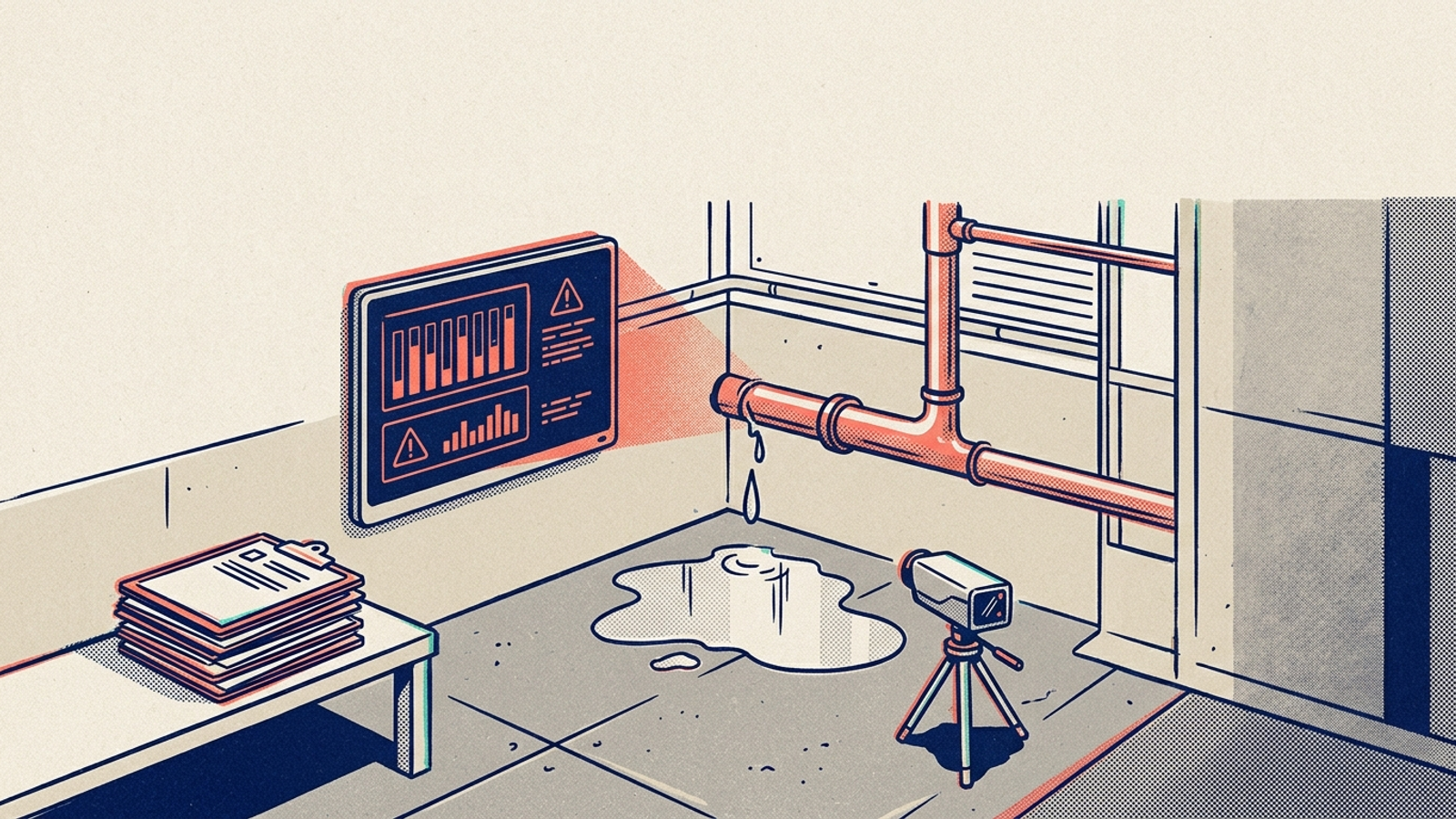
That unfinished work lands somewhere. To keep the account, your strategist drafts content briefs, follows up with the client’s developer about robots.txt, and explains the same citation gap on the next call. Five unbilled hours can make the projected $850 software-markup margin look rather less clever. SEO Agent’s agency benchmarks put annual client churn at roughly 38% and show 41% of agencies operating below a 30% net profit margin. Those figures do not diagnose any one cancellation. They are a reason to ask who actually does the work after the dashboard raises an alert. If the answer is your team, price for fulfillment rather than pretending you bought it.
Myth 3: “Tracked prompts have to be capped per client to stay profitable”
Imagine managing a $10,000-a-month paid search account with a tool that lets you monitor only 25 queries. I would leave that demo call early. Yet agencies accept similar limits in AI search because prompt tracking arrives packaged as a new kind of software cost.
A Rework vendor comparison lists a Peec AI plan at $495 a month for 10 client projects and 277 total prompts: roughly 27 per client if divided evenly. Other US vendors charge between $0.66 and $1.89 per tracked prompt. So agencies ration tracking to a brand name and a handful of broad category terms. That protects the tool bill while leaving the questions buyers actually ask unexamined.
A B2B buyer may not search “commercial liability insurance.” They may ask an engine to compare policies for a 50-person HVAC contractor in Ohio, including subcontractor riders and claims handling. That is a different question, and the answer may name different vendors. I would not pretend any prompt set captures every variation. But a cap that discourages testing new buyer questions works against the job. We made the case against that incentive in Don’t Buy a Prompt Meter. If your agency needs to examine recommendations across ChatGPT, Gemini, Perplexity, Claude, Grok, DeepSeek, and Google AI Overviews, ask what happens to your bill when the question list grows.

Myth 4: “Seat-based and tiered pricing scales cleanly as our agency grows”
The forecast usually assumes each new client brings in another retainer while software stays a modest background expense. Then a project limit forces a plan upgrade, prompt charges appear, and an account manager spends Friday translating alerts into tasks someone else must approve. Revenue rises by account; costs rise by bracket and by hours.
Rocketito’s agency pricing benchmarks put a useful guardrail on the problem: fulfillment and tooling need to stay around 15% to 20% of the client retainer for healthy profitability through normal churn. In our breakdown of a 10-client AEO retainer, tier changes and manual patching show how quickly those costs can swell across a book of accounts. The exact point where a plan stops working depends on the retainer and the work. The mechanism does not.
Model the next pricing tier before you sell the next account. Include the human time needed to turn a report into a shipped change. Otherwise, the client who looked profitable in the sales forecast may be paying for a software upgrade and an unofficial second job for your strategist.
Myth 5: “Injecting schema markup is the whole technical job”
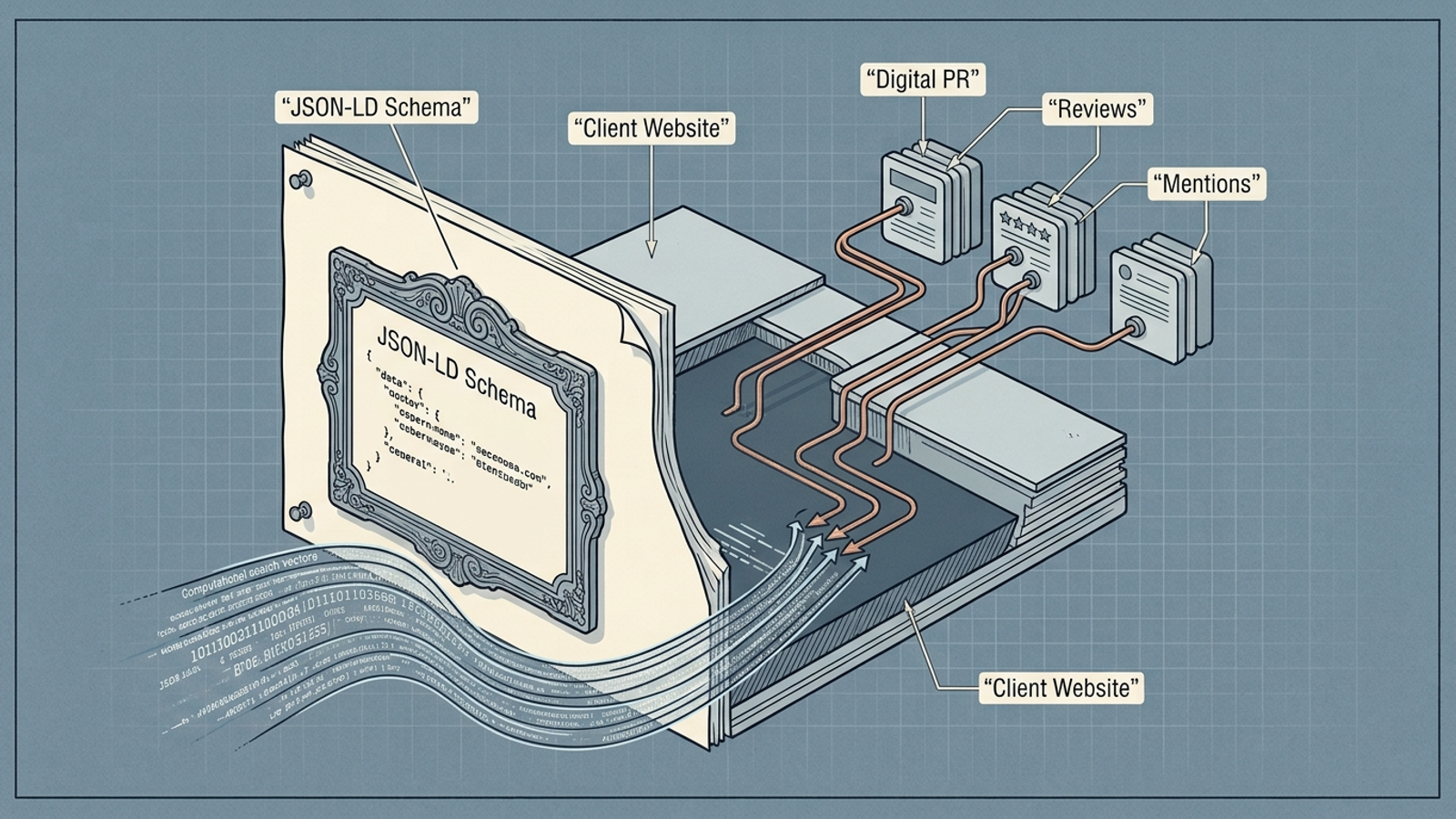
Structured data is satisfyingly sellable. Paste FAQPage and Organization JSON-LD into a site, charge for a technical upgrade, and show the client code that was not there yesterday. I have nothing against doing useful technical work. I have a problem with calling one visible change a complete AEO program.
A controlled test of 1,885 pages highlighted in ZeroClick Labs’ research roundup found no measurable citation uplift across ChatGPT, Google AI Mode, or AI Overviews after schema implementation. The same roundup describes an analysis of 75,000 brands in which unlinked third-party mentions correlated more strongly with AI citations (r=0.664) than traditional backlinks (r=0.218). Correlation is not a delivery plan, but it is a poor argument for selling self-declared markup as the whole answer. An engine can draw on what other sources say about a business, not just what the business says in its own code.
Treat schema as one technical task, not proof that the citation job is done. Check what engines can retrieve, what they find, and where the client’s authority is being established beyond its own site.
Myth 6: “You need client developer buy-in to ship technical fixes”
Every agency operator knows this queue. An audit finds that a broad server rule returns 403 errors to Claude-SearchBot. You write the ticket, send it to the client’s developer, and wait through sprint planning while the retainer clock keeps running. It is tempting to treat the delay as an unavoidable feature of technical SEO.
It is not always unavoidable. Technical teams can use edge-level routing through platforms such as Cloudflare Workers to handle bot-access rules, response codes, and HTML changes at the CDN layer without editing the client’s application code. That does not mean an agency can change a client’s site without access, permission, or a review of what the change affects. It means the client’s developer backlog need not be the only path to deployment. Work out who can authorize and verify an edge change before the audit turns into a three-month Jira memorial.
Myth 7: “Clients won’t notice if nothing ships”
This is the hardest one to kill because a polished report can buy time. I believed a version of it when I ran search accounts: if the monthly document was detailed enough, the work would feel substantial. Now the document has citation-share graphs and competitive crawl summaries instead of rank tables. The temptation is the same. A client sees fourteen pages, assumes something happened, and moves on to the next meeting.
But the question comes back: what changed? A marketing director can check the CMS, ask which access rule was updated, or compare this month’s buyer-question coverage with last month’s. If your answer is a list of recommendations waiting for their team to implement, the branded report stops looking like a service. Generative search can be unpredictable; that does not excuse charging for execution and delivering observation.
Before putting any vendor inside an agency retainer, I would ask five questions. They expose the handoff that most sales demos glide past:
- Do you ship code and content, or hand us a task list? Count the writing, testing, approvals, and deployment your team still has to do.
- How do you handle crawler access? Ask how the vendor distinguishes live retrieval bots from other crawlers and how it would get an approved fix live.
- What happens when we track more buyer questions? A prompt limit should not make a thorough account more expensive to understand.
- What does fulfillment cost at 15 client domains? Include tier changes and the hours your account managers spend turning alerts into action.
- Can we show the client an action-by-action record? A monthly summary deck is thin evidence when a client asks what happened during a flat quarter.
An action log matters because it ties the report to work someone can inspect. It can show which technical changes were made, which pages were published, and why those tasks mattered to the commercial questions being tracked. It cannot guarantee a citation or rescue a weak strategy. It can, however, stop the agency from treating a chart as a substitute for delivery.
That distinction is why we built groas for agencies around autonomous execution with human strategic ownership, rather than another pile of recommendations for an account manager to chase. The engine works continuously; a named strategist sets direction and guardrails, and action logs make the work visible. If you add AI search to a client retainer, make sure there is work behind the reporting. Stop selling the camera pointed at the leak. Sell the work that fixes it.